
 EN
EN  简体中文
简体中文 English
 Français
 Español
 عربي
عربي Русский
Machinery Weight 55-72t
Max Feeding size(mm) ≤700mm
Hopper Volume(m³) /



 REQUEST A QUOTE
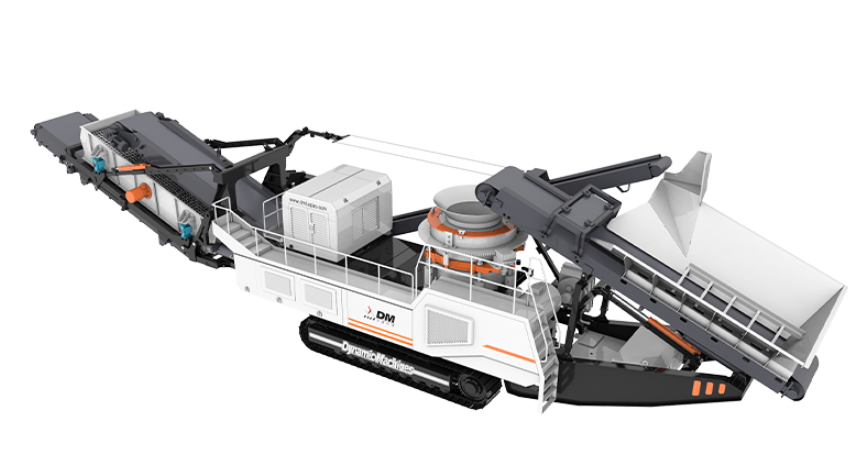
In mining fields, quarry sites, and large infrastructure projects, raw material is rarely uniform. Large rock pieces often mix with smaller fragments. Some are dense and solid, others are already fractured before processing even begins.
This kind of variation creates a simple problem: materials cannot be used directly. They need to be reduced into a more manageable and consistent form before they can move further down the production line.
That is where cone crusher systems come into regular use. Instead of relying on sudden force, the process is controlled and gradual. A cone crusher supplier provides equipment designed to handle this kind of continuous pressure, where material flow does not stop and input conditions keep changing throughout the day.
The focus is not only breaking material, but keeping the whole process stable.
Cone crushers take charge of secondary crushing on stone processing lines. Large rock chunks get broken roughly in primary crushing, yet these pieces still need further sizing for building materials and industrial raw materials.
Stones travel down the crushing chamber and get squeezed gradually. The machine does not break rock with one hard strike; repeated gentle compression shrinks rock size steadily and predictably.
Field operators see three obvious traits during running:
This working mode suits heavy-duty production sites, where incoming rock varies a lot in size and hardness.
Cone crusher manufacturers build machines around this cyclic squeezing movement. The equipment can hold steady crushing performance through long, continuous working shifts.
At first glance, a cone crusher might seem like a standalone machine. In real applications, however, it is only one part of a larger system.
A cone crusher supplier often plays a supporting role in shaping how the equipment is used. This includes helping match the machine with material conditions, production scale, and the layout of the processing line.
In many industrial sites, the real challenge is not simply crushing material, but making sure every stage of the workflow connects smoothly. If one part slows down, the entire chain feels it.
Because of that, supplier input often influences:
So the supplier is not only providing equipment, but also helping define how the system behaves in daily use.
Cone crushers are widely used in industries where raw materials need controlled reduction before further handling.
| Application Environment | Type of Material | Processing Requirement |
|---|---|---|
| Mining operations | Hard ore and rock | Continuous size reduction |
| Quarry production | Large stone blocks | Uniform shaping output |
| Construction sites | Mixed debris materials | Stable processing flow |
| Infrastructure work | Natural stone and soil mix | Consistent grading support |
| Industrial material use | Dense raw inputs | Repeatable reduction process |
Although each environment is different, they all share a similar requirement: materials must become more predictable and easier to handle.
For stone processing plants, uniform finished material counts more than high production speed. When crushed stone particles vary wildly in size, conveying, screening and mixing processes will face lots of obstacles.
Cone crushers deliver regulated crushing action to fix this problem. Rocks are broken through regular repeated compression instead of irregular random impact.
This stable crushing process brings tangible benefits on site:
Crusher manufacturers prioritize maintaining stable crushing output, especially at job sites with unstable raw rock hardness and feeding sizes.
Machines at aggregate and mining sites bear constant heavy loads. They need to operate for long continuous hours and process abrasive rocks with uneven specifications.
Under such harsh working circumstances, sustained stable performance outweighs temporary high production capacity.
Manufacturers design crushers to keep balanced operation amid changing working parameters. Feeding volume may fluctuate, rock hardness differs constantly, and machine load rises and falls throughout shifts.
The equipment should maintain smooth running status without frequent manual adjustments responding to every minor condition shift.
Rational overall design and matched component configuration enable the crusher to run dependably under long-term heavy working loads.
A cone crusher is rarely used alone. It is part of a wider processing chain that may include feeding equipment, conveyors, sorting systems, and storage stages.
If any part of this chain is not aligned properly, material flow can slow down or become uneven. That affects the entire operation.
Cone crusher suppliers often consider how their equipment connects with surrounding systems. This includes how material enters the crusher and how it leaves for the next stage.
When integration is handled properly, the result is:
In large operations, these small improvements can make a noticeable difference in overall efficiency.
In real working environments, material conditions are rarely fixed. One day the input may be harder rock, another day it may contain mixed fragments or softer layers.
Because of this, adaptability has become an important requirement for crushing systems.
Cone crusher equipment is expected to handle these changes without needing major adjustments. Instead of stopping the system or reconfiguring it frequently, operators rely on steady performance across different conditions.
Suppliers support this by providing systems that can respond to variation while maintaining consistent output behavior.
This flexibility helps reduce downtime and keeps production moving without constant manual intervention.
Stone processing lines are not just meant to crush raw rock. The whole setup needs to keep materials moving steadily without frequent stalls.
Cone crushers stabilize the entire production line. They take irregular incoming rock and turn it into evenly sized finished material that works well for screening, conveying and other downstream equipment.
With consistent discharge, the whole plant runs at a steady, predictable pace. The crusher does not operate alone; it works alongside other machines as a connected production system.
For mining and aggregate plants, sustained stable operation matters more than brief spikes in output. Site managers can make precise production plans, and unplanned downtime from uneven material is cut down greatly.
Crusher manufacturers build their machines to hold consistent crushing performance, so the equipment can reliably run for extended periods under harsh site conditions.
Machinery Weight 53-62t
Max Feeding size(mm) ≤600mm
Hopper Volume(m³) 80-360t/h
Machinery Weight 55-57t
Max Feeding size(mm) ≤215mm
Hopper Volume(m³) /
Machinery Weight 33-35t
Max Feeding size(mm) 150-400t/h
Hopper Volume(m³) 2.5
Machinery Weight 33t
Max Feeding size(mm) 150-400t/h
Hopper Volume(m³) 7m³
Machinery Weight 54-63t
Max Feeding size(mm) ≤600mm
Hopper Volume(m³) /
Machinery Weight 9.5-75t
Max Feeding size(mm) ≤1000mm
Hopper Volume(m³) 61-1204t/h
Just let we know what you want, and we will get in touch with you as soon as possible!

A high-tech enterprise integrating R&D, production, sales and service of crawler and stationary crushing and screening.
Scan the Mobile QR code
 Tel: +86 21-6891 1957
 Fax: +86 21-3756 6069
 E-mail: sales@dmcrushers.com
 Add: No. 1188,Fengliang Road, Fengcheng Town, Fengxian District, Shanghai, China