
 EN
EN  简体中文
简体中文 English
 Français
 Español
 عربي
عربي Русский
Machinery Weight 55-72t
Max Feeding size(mm) ≤700mm
Hopper Volume(m³) /



 REQUEST A QUOTE
When selecting crushing equipment, enterprises typically first consider a fundamental question: what specific task will the equipment perform within the project? The answer depends on various factors, such as material characteristics, operating locations, production requirements, and on-site material flow patterns.
If crushing operations need to be carried out at multiple locations, or if transporting material to a fixed crushing zone would entail unnecessary handling steps, then a Mobile Impact Crusher is a compelling option. Rather than basing the choice on a single feature, a more pragmatic approach is to consider how the crusher integrates into the overall workflow.
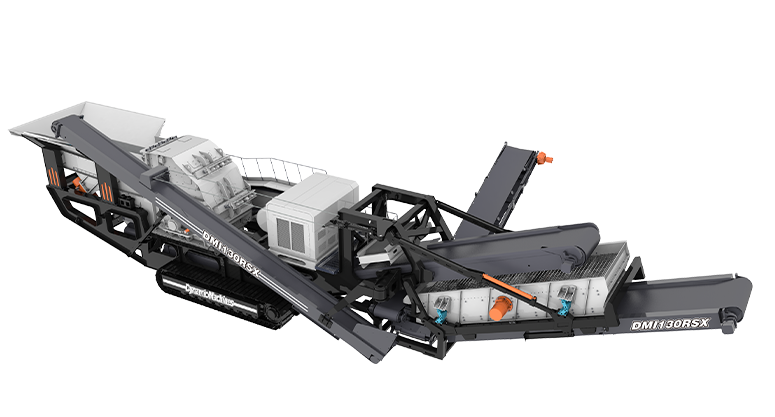
A mobile impact crusher is a crushing machine that reduces larger pieces of material into smaller fragments while allowing the crushing unit to be moved around the worksite. Instead of sending all incoming material to a permanent crushing plant, operators can bring the equipment closer to where the material is being generated or collected.
This type of crusher is commonly associated with construction, demolition, recycling, quarrying, and roadwork. The exact application varies from one project to another, but the basic idea remains the same: material is fed into the crusher, broken down through impact, and then discharged for the next stage of handling.
Inside the crushing chamber, the incoming material meets rotating impact components. Repeated impact breaks the material apart as it passes through the machine. Depending on the setup, the processed material may go directly to stockpiling or be sent through additional screening and processing.
Mobility changes how the crusher can be incorporated into a project. When the machine can be positioned near the material source, there may be less need to transport unprocessed material across the site before crushing. The practicality of this arrangement still depends on the material, site layout, desired output, feeding method, and the rest of the processing workflow.
The operating sequence is relatively easy to follow once the material flow is understood:
Feeding → Impact Crushing → Material Reduction → Screening → Discharge
Not every mobile crushing setup uses exactly the same arrangement, but these stages provide a useful way to understand what happens from the moment material enters the machine to the point where processed material leaves it.
| Stage | Main Process |
|---|---|
| Material Feeding | Raw material enters the crusher through a suitable feeding system. A steady material flow helps maintain consistent operation. |
| Impact Crushing | Rotating impact components break the incoming material into smaller pieces. Different materials may respond differently to impact. |
| Material Reduction | Larger pieces are gradually reduced to the required size for screening, reuse, or further processing. |
| Screening & Separation | Crushed material is separated by size. Oversized pieces may return for additional crushing. |
| Material Discharge | Processed material leaves the crusher for stockpiling, transport, reuse, or further processing. |
The material going into a mobile impact crusher has a direct bearing on how the crushing operation should be arranged. Before looking at individual machines, it is worth identifying what the feed material actually looks like and how it behaves during handling.
Mobile impact crushers are used with materials including concrete, asphalt, limestone, natural stone, demolition debris, and recycled aggregate. These materials are not interchangeable, though. Their physical properties can vary significantly, and a crushing setup that suits one application may not be appropriate for another.
Material Type
A clear description of the feed material is a useful starting point. Concrete from a controlled demolition project is different from a mixed stream of construction waste. Natural stone also varies according to its source and composition.
The more clearly the incoming material is understood, the easier it becomes to discuss the appropriate crushing arrangement with equipment suppliers and operators.
Hardness
The hardness of the material affects how it responds when it enters the crushing chamber. Relatively hard materials can behave differently from softer feed and may place different demands on the crushing components.
This characteristic should be considered alongside the expected amount of material and the intended output rather than viewed on its own.
Abrasiveness
Hardness is not the only material property that matters. Some materials contain particles that are particularly abrasive and can contribute to wear on components exposed to the crushing process.
For applications involving abrasive feed, component wear and routine maintenance become part of the operating picture. These considerations are better addressed during equipment selection than after the crusher has already been put into regular use.
Moisture and Material Condition
The condition of the material can also affect how it moves through the equipment. Moisture, dirt, mixed materials, and other contaminants may change the way the feed behaves during loading and crushing.
Recycled and demolition materials deserve particular attention because their composition may not be uniform. Depending on the source, unwanted materials may need to be removed before they enter the crusher or separated during the wider processing operation.
Feed Material Size
The size of the incoming pieces is another practical consideration. Material should be compatible with the crusher's feeding arrangement so that the machine can receive it without unnecessary interruptions.
A feed stream containing widely different piece sizes may also require a different handling approach from one with a more consistent composition. Looking at how the material arrives at the crusher can help determine whether additional preparation is needed.
Choosing a crusher based only on the material entering the machine can leave an important part of the picture out. The required end product deserves equal attention.
Consider where the processed material is going next. It might be reused as aggregate, sent through a screening process, passed into another crushing stage, stockpiled for later use, or transported to another location. Each route places different demands on the crushing arrangement.
The required output size is also worth defining before comparing equipment. A project that needs material separated into several size ranges may require screening alongside the crusher. Another application may have a simpler material flow with fewer processing stages.
This is where the relationship between crushing and screening becomes important. The crusher reduces the incoming material, while screening can separate the resulting pieces according to the needs of the project. Material that does not meet the required size may then need to return for further processing.
Looking at the complete route from feed material to finished product gives a more useful basis for equipment selection. The crusher is one part of that route, and its role should make sense alongside the feeding, screening, stockpiling, and transport arrangements used on the site.
The location of crushing operations directly affects how the equipment is integrated into the project. Crushers operating at demolition sites face vastly different working conditions compared to those used in quarries or road construction sites.
Construction Projects
Construction projects generate materials such as concrete, stone, and asphalt; mobile impact crushers allow crushing operations to be set up directly near the material stockpiles.
Demolition Projects
Materials generated at demolition sites often have complex compositions, so it is essential to understand the makeup of the feed material before crushing begins. Once the feed has been thoroughly assessed, the crusher can be integrated into the overall operational workflow.
Recycling Operations
Recycled materials must undergo multiple processing stages before meeting reuse standards. Crusher placement is critical, as the various processes require seamless coordination. A practical approach is to view the recycling process as a complete operational chain and determine the optimal location for the crushing stage accordingly.
Quarrying and Aggregate Production
Quarrying and aggregate production involve shifting extraction zones, changing material sources, and adjusting processing requirements. Using relocatable crushing units allows for flexible adjustments to the processing layout in response to changing operational conditions.
Road Construction
Road construction projects require progressive advancement along the work area rather than being confined to a single, fixed location. With proper planning of access routes, material flow, and equipment layout, mobile crushing units are perfectly suited to such dynamic construction environments.
Selecting a mobile impact crusher becomes easier when the project is considered as a whole rather than starting with a particular machine. The material, working environment, material flow, and daily operating conditions all have a role in determining which crushing arrangement makes sense.
| Step | Key Consideration |
|---|---|
| Identify the Material | Consider the material type, condition, hardness, abrasiveness, moisture, and consistency. |
| Define the Desired Output | Determine the required finished material and whether screening or further crushing is needed. |
| Evaluate the Project Location | Review available space, access routes, material sources, stockpile areas, and equipment movement. |
| Determine Mobility Requirements | Consider how often the crusher needs to move, relocation conditions, and transportation needs. |
| Review Feeding and Discharge Needs | Check how material will enter the crusher and where processed material will go afterward. |
| Consider Maintenance and Operation | Review inspection, cleaning, service access, component replacement, and operator requirements. |
| Compare Suitable Configurations | Compare available configurations according to the material, output, site, mobility, handling, and maintenance needs. |
This makes the selection process more practical. Instead of choosing a machine first and then adapting the project around it, the equipment is evaluated according to the material, output, site layout, mobility, feeding method, discharge route, and maintenance requirements already established.
A purchase decision involves more than checking whether a crusher can process the intended material. The equipment needs to fit the way the project will operate from delivery through daily use and maintenance.
Start by reviewing the overall configuration. The feeding system, crushing arrangement, screening equipment, and discharge method should work together as part of the planned material flow. If one section does not match the others, additional handling or operational adjustments may be required.
Transportation and site deployment also deserve attention. A mobile crusher still has to reach the working area, be positioned correctly, and operate within the available site space. Access conditions, relocation requirements, and the relationship between the crusher and surrounding equipment should be understood before the equipment arrives.
Maintenance is another area that should not be left until after installation. Review how routine inspections are carried out, where service work takes place, and how wear components can be accessed when replacement is needed. Information about technical support and replacement components can also be useful when assessing long-term operation.
The people who will operate the equipment should be considered as well. Operating information needs to be clear enough for the actual working environment, while routine controls and maintenance procedures should be understandable to the personnel responsible for the machine.
Finally, look at the entire material-handling chain. Loading equipment, the crusher, screening equipment, conveyors, stockpiles, and transportation all interact with one another. A decision that works for the crusher alone may not fit the workflow of the complete project. Evaluating these connections before purchase provides a clearer basis for selecting an arrangement that matches the worksite and its material flow.
Decisions regarding crushing projects are rarely driven by a single factor. The material to be processed, expected output, operating area, and on-site material flow all influence equipment selection.
On sites with variable working conditions, equipment mobility may be crucial; conversely, when the crusher serves as one link in a longer processing chain, the ease of feeding, discharging, and maintenance may be more critical.
Considering these conditions comprehensively before making a decision helps you evaluate and compare different types of equipment based on your actual operational needs.
Machinery Weight 53-62t
Max Feeding size(mm) ≤600mm
Hopper Volume(m³) 80-360t/h
Machinery Weight 55-57t
Max Feeding size(mm) ≤215mm
Hopper Volume(m³) /
Machinery Weight 33-35t
Max Feeding size(mm) 150-400t/h
Hopper Volume(m³) 2.5
Machinery Weight 33t
Max Feeding size(mm) 150-400t/h
Hopper Volume(m³) 7m³
Machinery Weight 54-63t
Max Feeding size(mm) ≤600mm
Hopper Volume(m³) /
Machinery Weight 9.5-75t
Max Feeding size(mm) ≤1000mm
Hopper Volume(m³) 61-1204t/h
Just let we know what you want, and we will get in touch with you as soon as possible!

A high-tech enterprise integrating R&D, production, sales and service of crawler and stationary crushing and screening.
Scan the Mobile QR code
 Tel: +86 21-6891 1957
 Fax: +86 21-3756 6069
 E-mail: sales@dmcrushers.com
 Add: No. 1188,Fengliang Road, Fengcheng Town, Fengxian District, Shanghai, China