
 EN
EN  简体中文
简体中文 English
 Français
 Español
 عربي
عربي Русский
Machinery Weight 55-72t
Max Feeding size(mm) ≤700mm
Hopper Volume(m³) /



 REQUEST A QUOTE
Crushing work can look very different from one project to another. A quarry may need to process rock close to an extraction area. A construction project may need to handle material at a changing work site. A recycling operation may deal with broken concrete or other construction waste.
These situations create different equipment needs.
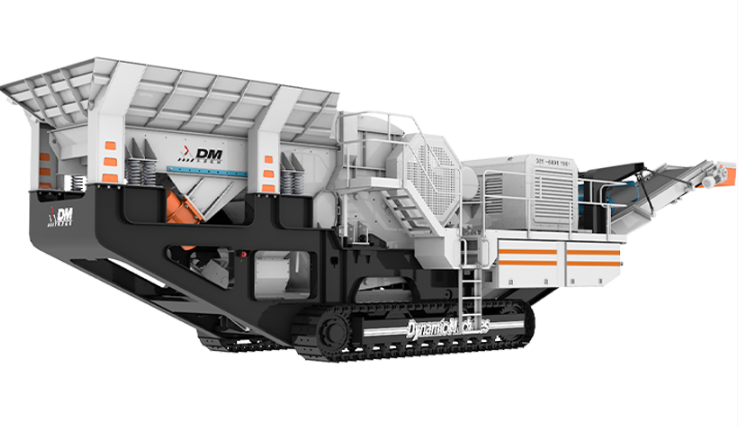
A Mobile Crusher Manufacturer can be relevant when a project needs crushing equipment that can move with the work. Instead of relying entirely on a fixed processing location, a mobile crushing setup can be positioned closer to the material.
This can change how material moves around a site.
The decision, however, is not simply about choosing mobile equipment. Buyers also need to consider the material, site layout, working process, maintenance plan, operator needs, and support available from the manufacturer.
A project does not always stay in one place.
Construction areas can develop in stages. Mining operations can move as material is extracted. Road projects can cover long sections of land. Recycling work may also take place at different locations.
A fixed crushing setup may not suit every situation.
Mobile equipment offers another approach. It can be moved closer to the material that needs processing. This may reduce the need to transport unprocessed material over long internal routes.
The value comes from flexibility.
When the work area changes, the crushing equipment can potentially move with it. This can help project managers adjust the processing layout according to actual site conditions.
A mobile crusher may be considered for:
The suitability depends on the individual project.
A buyer should understand the site before deciding whether mobile crushing makes practical sense.
The physical layout of a project can have a strong influence on equipment selection.
Some sites have limited space. Others have several working areas spread across a large location.
Material movement can become a major part of the daily workflow when the crushing area is far from where the material is generated.
A mobile crushing system may help bring processing closer to the source.
Consider a construction site where old concrete and other materials need to be processed. Moving every load to a distant fixed facility can add extra handling steps.
With suitable mobile equipment, processing may take place closer to the work area.
The same idea can apply to quarry and mining activities.
When the source material changes location, the processing arrangement may need to change as well.
| Project Condition | Why Mobile Crushing May Be Considered |
|---|---|
| Changing work areas | Equipment can support a more flexible site arrangement |
| Limited site space | Processing can be arranged closer to the material |
| On-site material generation | May reduce unnecessary movement of unprocessed material |
| Temporary projects | Can provide an alternative to permanent processing facilities |
| Multiple working locations | Supports a more adaptable workflow |
| Recycling activities | Allows processing closer to where waste material is collected |
These benefits do not automatically apply to every project.
Site access, ground conditions, transportation arrangements, and local requirements still need to be reviewed.
Not every material behaves in the same way.
Rock, concrete, construction waste, recycled material, and other feed materials can have different characteristics.
The crusher therefore needs to match the intended material.
Before contacting a Mobile Crusher Manufacturer, buyers should have a clear idea of what they want to process.
Useful questions include:
The answers can help manufacturers understand the application.
They can then discuss whether a particular equipment arrangement is suitable.
Material information is also important because it can influence wear and maintenance requirements.
A machine used for one type of material may have different service needs from equipment used for another.
For this reason, buyers should avoid selecting a crusher based only on general descriptions.
The application should guide the conversation.
Mobility can be useful when the working area is not permanent.
A construction project may move from one section to another as the building or infrastructure develops. A road project can extend across different locations. Mining operations can also change as extraction progresses.
A mobile crusher can support this changing workflow by allowing the processing point to move.
This does not mean the equipment can be moved without planning.
Site access still matters.
The project team needs to consider roads, working areas, ground conditions, nearby structures, and other equipment.
Moving a crusher also requires coordination.
Operators need to understand where the machine should be positioned and how material will reach it. The output also needs to be collected or moved to the next stage.
Mobility is therefore part of a larger system.
A mobile crusher becomes more useful when its movement fits naturally into the project's material flow.
On-site processing can change the way materials move around a project.
Imagine a construction site where demolition material is generated in one area. If the material has to be transported elsewhere before processing, additional handling may be required.
A mobile crushing setup can potentially be positioned closer to the material.
This can create a shorter material path.
The same principle can apply to quarry work. Material can be processed closer to the extraction area instead of being moved to a distant fixed location.
For recycling operations, on-site processing may also support a more direct workflow.
Material can move from collection to processing without unnecessary changes in location.
However, the actual benefits depend on the project layout.
A buyer should compare the complete material flow rather than looking at the crusher alone.
The key question is simple:
Can mobile processing make the overall workflow easier to manage?
If the answer is yes, a Mobile Crusher Manufacturer may be worth considering.
Choosing mobile crushing equipment requires more than looking at the machine itself.
The equipment should fit the project's working conditions.
A useful purchasing discussion can include several areas.
Material Requirements
The manufacturer needs to understand the type of material being processed.
Site Conditions
The available working area, access routes, ground conditions, and surrounding equipment can affect the equipment arrangement.
Processing Needs
The intended use of the processed material should be considered.
Mobility Requirements
Buyers should explain how often the equipment may need to move and between which areas.
Maintenance
Routine inspection, cleaning, servicing, and replacement parts should be considered before purchase.
Operator Requirements
The equipment should be practical for the people who will operate and maintain it.
This type of discussion can help prevent a common purchasing problem.
A buyer may focus on equipment specifications without considering whether the machine fits the actual workflow.
A practical choice begins with the project.
Temporary projects can have different equipment priorities from permanent facilities.
A permanent processing plant may require a fixed layout and dedicated infrastructure. A temporary construction or recycling project may not need that type of arrangement.
A mobile crusher can provide another option.
The equipment can be used during the project and potentially moved when the work area changes.
This can be useful for projects such as:
The key issue is project duration and equipment use.
Buyers should consider how often the equipment will be used and what will happen after the project ends.
Storage and transportation also need attention.
A machine that is suitable for one site may later be required at another location.
This makes long-term equipment planning important even for short-term projects.
The manufacturer can influence the ownership experience.
A machine is not used in isolation. Buyers may need assistance with installation, operation, maintenance, replacement parts, or troubleshooting.
This makes supplier communication important.
Before making a purchase, buyers can ask:
| Supplier Question | Why It Matters |
|---|---|
| What applications is the equipment designed for? | Helps confirm whether it matches the project |
| What materials can it process? | Supports material compatibility decisions |
| How is the equipment moved? | Helps with site planning |
| What maintenance is required? | Gives a clearer view of ownership needs |
| Are replacement components available? | Supports future servicing |
| What documentation is provided? | Helps operators understand the equipment |
| What after-sales support is available? | Provides assistance after installation |
| Can the manufacturer discuss project conditions? | Helps connect equipment selection with real use |
A manufacturer that asks detailed questions about the project may provide more useful guidance than one that focuses only on selling a machine.
The buyer should also provide accurate information.
Material type, working environment, site layout, and expected use all help create a clearer equipment discussion.
Mobile equipment works in changing environments.
It may encounter dust, uneven ground, material impact, weather exposure, and frequent movement around a work site.
Routine maintenance can help keep the equipment in a workable condition.
Maintenance planning should begin before the equipment arrives.
Operators and maintenance staff can establish procedures for inspection and cleaning. They can also understand which parts require regular attention.
Common areas of consideration include:
The actual maintenance procedure should follow the manufacturer's instructions and applicable site requirements.
A mobile crusher may be moved between different locations, so maintenance records can also help teams understand its operating history.
Good records make it easier to identify recurring issues and plan service work.
The relationship with a Mobile Crusher Manufacturer does not necessarily end when the equipment arrives at the project.
Projects change.
Material conditions may vary. Operators may change. The equipment may later be moved to another site.
Technical documents, operating guidance, replacement parts, and service assistance can become useful during these changes.
Buyers should therefore consider supplier support as part of the purchasing process.
A practical supplier relationship can help answer questions such as:
Clear communication can help project teams use the equipment more consistently.
The decision depends on the project's actual needs.
A Mobile Crusher Manufacturer may be a practical choice when material processing needs to follow a changing work area. It may also be relevant when a project wants to reduce unnecessary movement of unprocessed material.
Construction, mining, quarrying, demolition, road work, and recycling can all present situations where mobility deserves consideration.
The key is to look at the complete workflow.
Material needs to reach the crusher. Processed material needs to leave it. Operators need access. Maintenance needs to be possible. The equipment needs to fit the available working area.
When these factors work together, mobile crushing can become part of a more flexible project arrangement.
For buyers, the most useful starting point is not simply asking which machine to purchase. It is understanding where the material comes from, where it needs to go, how the work area changes, and what support the equipment will require throughout the project.
Machinery Weight 53-62t
Max Feeding size(mm) ≤600mm
Hopper Volume(m³) 80-360t/h
Machinery Weight 55-57t
Max Feeding size(mm) ≤215mm
Hopper Volume(m³) /
Machinery Weight 33-35t
Max Feeding size(mm) 150-400t/h
Hopper Volume(m³) 2.5
Machinery Weight 33t
Max Feeding size(mm) 150-400t/h
Hopper Volume(m³) 7m³
Machinery Weight 54-63t
Max Feeding size(mm) ≤600mm
Hopper Volume(m³) /
Machinery Weight 9.5-75t
Max Feeding size(mm) ≤1000mm
Hopper Volume(m³) 61-1204t/h
Just let we know what you want, and we will get in touch with you as soon as possible!

A high-tech enterprise integrating R&D, production, sales and service of crawler and stationary crushing and screening.
Scan the Mobile QR code
 Tel: +86 21-6891 1957
 Fax: +86 21-3756 6069
 E-mail: sales@dmcrushers.com
 Add: No. 1188,Fengliang Road, Fengcheng Town, Fengxian District, Shanghai, China