
 EN
EN  简体中文
简体中文 English
 Français
 Español
 عربي
عربي Русский
Machinery Weight 55-72t
Max Feeding size(mm) ≤700mm
Hopper Volume(m³) /



 REQUEST A QUOTE
A jaw crusher factory is a place where heavy equipment is built, assembled, and prepared for industrial use. The daily operation is not a single action. It is a chain of organized work that connects material handling, part preparation, assembly flow, inspection, and final movement out of the facility.
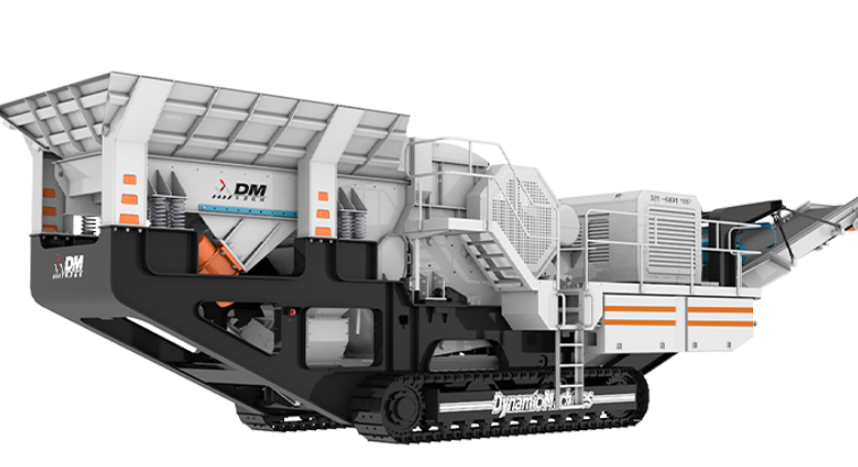
Everything inside the factory follows a steady rhythm. Metal parts arrive, get processed, move through different stations, and gradually form complete crushing equipment. The environment is structured, but not static. It changes based on production demand, order type, and workshop conditions.
The idea is simple. Raw components enter. Finished machines leave. The process in between is where most of the work happens.
Daily production in a jaw crusher factory is centered on transformation. Metal materials and prepared components are turned into large mechanical systems used for crushing raw materials in mining and construction work.
The work is not limited to assembly. It includes preparation, shaping, fitting, testing, and adjustment. Each stage depends on the previous one.
A typical day does not look the same from morning to evening. Some parts of the factory focus on cutting and forming. Others focus on assembly or inspection. Activity shifts between these areas depending on workflow.
The factory does not operate as one single line. It behaves more like multiple connected zones working at the same time.
The internal layout of a jaw crusher factory is arranged based on function rather than appearance. Each zone has a clear role, and materials move between them in a controlled direction.
There is no random movement. Heavy parts follow planned routes. Smaller components move through separate handling paths.
A simplified structure can be described like this:
| Area | Main activity | Movement level |
|---|---|---|
| Raw material zone | Storage and sorting of metal materials | Low |
| Processing zone | Cutting, shaping, and preparation of parts | High |
| Assembly zone | Fitting components into full equipment | High |
| Inspection zone | Checking alignment and movement behavior | Medium |
| Dispatch zone | Packing and preparing for transport | Medium |
The flow between these zones is continuous. Items rarely move backward unless adjustment is needed.
Before any machine is assembled, materials must be prepared. This stage sets the base for everything that follows.
Raw metal pieces arrive in different shapes and sizes. Some are large and rough. Others are already partially formed. The preparation stage is where these pieces become usable parts.
Work in this stage includes sorting, surface handling, and basic shaping. Materials are checked for condition before they move forward.
A simple flow can be seen here:
raw materials → sorting → shaping → surface handling → transfer to next stage
Nothing is rushed. If a part is not ready, it does not move forward. This avoids problems later during assembly.
Workers in this area focus on consistency rather than speed. A small mistake here can affect the entire equipment later.
Component forming is one of the most active parts of the factory. Metal parts are shaped into functional structures that will later become part of the crushing machine.
The process is controlled by equipment that applies force, cutting action, or shaping pressure. The goal is not decoration. It is structural accuracy and durability.
Parts produced in this stage include structural frames, support elements, and motion-related components.
Each piece must match a defined shape before moving forward. If it does not fit, it returns for correction.
A simplified breakdown of this stage:
This stage is repetitive, but every piece still requires attention. No two parts behave exactly the same during shaping.
Assembly is where the jaw crusher begins to take its recognizable form. Separate components are brought together and fitted into a complete structure.
This is not a single-step process. It happens in layers. Large structural parts are installed first. Smaller parts follow. Movement-related sections are added later.
Workers rely on alignment checks, fitting adjustments, and repeated confirmation of positioning.
A general assembly flow looks like this:
base structure → main frame setup → moving components → connection parts → adjustment stage
Each step depends on stability from the previous one. If alignment is off early, later steps become harder to correct.
The environment in this stage is slower compared to material processing. Attention is higher, movement is more careful, and adjustments are frequent.
A jaw crusher factory does not function as isolated departments. Each section depends on the others. If one slows down, others feel the impact.
Coordination happens through timing, communication, and material flow control. Parts are not sent randomly between zones. They move based on readiness.
Workers and supervisors maintain contact between stages. If a delay occurs in one area, adjustments are made in another.
A simple coordination view:
| Situation | Response |
|---|---|
| Component delay | Assembly slows or pauses specific section |
| Excess output | Storage area temporarily expands handling |
| Adjustment request | Part returns to processing zone |
| Inspection issue | Assembly stage holds progression |
This keeps the workflow balanced even when conditions shift.
Quality checking in a jaw crusher factory is not limited to the end of production. It appears throughout the process in small steps.
At each stage, there are checks related to shape, alignment, and movement behavior. These checks help ensure that problems do not accumulate.
Inspection methods often include:
| Stage | Focus of inspection |
|---|---|
| Material preparation | Surface condition and shape readiness |
| Component forming | Structural accuracy |
| Assembly stage | Fit and alignment |
| Final check | Overall movement behavior |
Inspection does not interrupt the entire factory. It is integrated into production flow.
Adjustment is a constant part of factory work. Machines and components do not always behave exactly the same way during production.
Small changes in material behavior or assembly fit can require correction. These adjustments are usually minor but important.
They can involve repositioning a part, changing alignment, or refining movement balance.
A typical adjustment sequence:
Adjustment does not mean failure. It is part of normal operation.
The factory relies on this flexibility to keep production steady without stopping the entire system.
A jaw crusher factory depends on both mechanical systems and human oversight. Machines handle repetitive tasks such as shaping and moving heavy parts. Workers manage observation, correction, and decision-making.
The relationship is not one-sided. Machines provide consistency. People provide judgment.
A simple example:
This interaction repeats throughout the day in different areas of the factory.
Communication between shifts also plays a role. Information about machine behavior or part variation is passed forward to avoid repeating issues.
Once assembly and inspection are completed, the equipment moves to the final handling stage. This is where the finished jaw crusher is prepared for transportation.
The equipment is not moved immediately. It goes through organization and protection steps first.
Large structures are positioned carefully to avoid stress during movement. Parts are secured. The machine is then transferred to a designated area for dispatch preparation.
The final flow is simple:
completion → final check → securing → storage → transport preparation
Handling at this stage focuses on stability. Even though the machine is built for heavy work, movement during transport still requires care.
Not every jaw crusher produced in a factory is identical. Different applications require different configurations and structural variations.
Instead of changing the entire system, factories adjust workflows and component selection.
Changes may include:
| Requirement change | Factory response |
|---|---|
| Design variation | Assembly plan adjustment |
| Material difference | Processing calibration |
| Output behavior need | Inspection focus shift |
| Workflow load change | Zone balance adjustment |
This flexibility allows production to continue without rebuilding the system each time.
Daily production in a jaw crusher factory is a coordinated process built on movement, adjustment, and continuous interaction between people, machines, and materials. Each stage connects to the next, forming a steady industrial flow that supports equipment manufacturing in a structured environment.
Machinery Weight 53-62t
Max Feeding size(mm) ≤600mm
Hopper Volume(m³) 80-360t/h
Machinery Weight 55-57t
Max Feeding size(mm) ≤215mm
Hopper Volume(m³) /
Machinery Weight 33-35t
Max Feeding size(mm) 150-400t/h
Hopper Volume(m³) 2.5
Machinery Weight 33t
Max Feeding size(mm) 150-400t/h
Hopper Volume(m³) 7m³
Machinery Weight 54-63t
Max Feeding size(mm) ≤600mm
Hopper Volume(m³) /
Machinery Weight 9.5-75t
Max Feeding size(mm) ≤1000mm
Hopper Volume(m³) 61-1204t/h
Just let we know what you want, and we will get in touch with you as soon as possible!

A high-tech enterprise integrating R&D, production, sales and service of crawler and stationary crushing and screening.
Scan the Mobile QR code
 Tel: +86 21-6891 1957
 Fax: +86 21-3756 6069
 E-mail: sales@dmcrushers.com
 Add: No. 1188,Fengliang Road, Fengcheng Town, Fengxian District, Shanghai, China