
 EN
EN  简体中文
简体中文 English
 Français
 Español
 عربي
عربي Русский
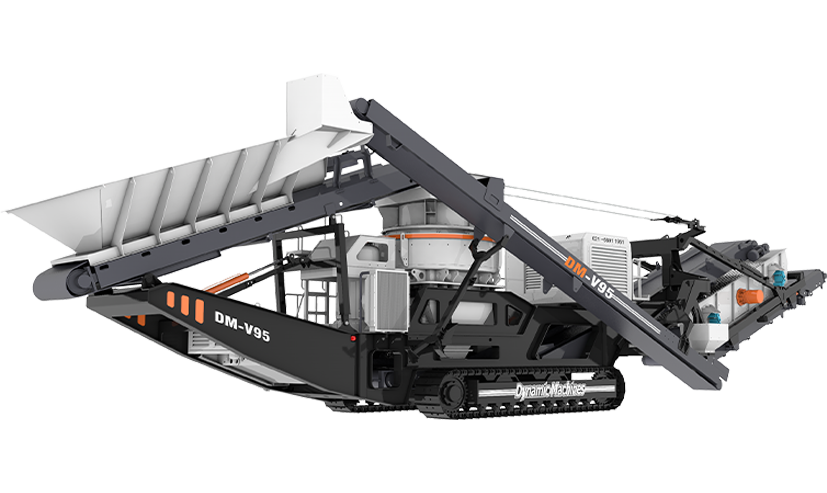
Machinery Weight 55-72t
Max Feeding size(mm) ≤700mm
Hopper Volume(m³) /



 REQUEST A QUOTE
Stone crushing machines are essential equipment in mining, quarrying, construction, and recycling industries. Their primary function is to reduce large stones or raw materials into smaller, usable aggregates for further processing or direct application. However, not all materials behave the same during crushing. Choosing the right material types is critical for efficiency, product quality, and equipment lifespan. From the perspective of a Stone Crushing Machine Factory, understanding material characteristics helps users improve performance and reduce operational risks.
One of the suitable material categories for stone crushing machines is natural stone with hard or medium-hard properties. These materials are commonly found in quarries and mining operations.
Typical examples include:
These stones have stable physical properties and predictable crushing behavior. Stone crushing machines can process them efficiently while producing aggregates with consistent size and shape. Hard stones are especially suitable for jaw crushers and cone crushers, while medium-hard stones can be processed by impact crushers as well.
Materials that are brittle and have low plasticity are ideal for stone crushing. Brittle materials tend to fracture easily under compressive or impact forces, which improves crushing efficiency.
Common brittle materials include:
Because these materials break cleanly, they generate fewer fines and less clogging inside the crushing chamber. This characteristic reduces wear on internal components and helps maintain stable output quality.
Construction waste has become an increasingly important application area for stone crushing machines. Materials such as concrete blocks, bricks, and asphalt can be effectively processed and recycled.
Suitable construction waste materials include:
From a Stone Crushing Machine Factory design standpoint, modern machines often integrate magnetic separators and adjustable crushing chambers to handle mixed construction materials. These recycled outputs are widely used in road base layers, backfilling, and secondary construction applications.
Certain mineral ores are also suitable for stone crushing machines, especially those with moderate hardness and abrasiveness.
Examples include:
These materials can be processed efficiently when the crushing machine is properly selected and configured. Controlling feed size and moisture content is important to avoid excessive wear or blockages during crushing operations.
Moisture plays a significant role in crushing performance. Materials with low to moderate moisture content are more suitable for stone crushing machines.
Advantages of controlled moisture materials include:
Non-metallic minerals are widely processed using stone crushing machines due to their stable structure and broad industrial demand.
Typical non-metallic materials include:
These materials are commonly used in building materials, ceramics, and chemical industries. Proper crushing ensures uniform particle size, which is critical for downstream processing and product quality.
Stone crushing machines are not only used for size reduction but also for shaping aggregates. Materials that benefit from impact shaping are especially suitable.
Such materials include:
Impact-based crushing helps produce cubic-shaped aggregates, improving compaction and bonding performance in construction applications.
While many materials can be crushed, suitability depends on several key factors:
A reliable Stone Crushing Machine Factory typically guides material compatibility to ensure suitable equipment selection and long-term performance.
Stone crushing machines are suited for hard and medium-hard natural stones, brittle materials, construction waste, certain mineral ores, and non-metallic minerals with controlled moisture levels. Understanding material characteristics is essential for achieving efficient crushing, high-quality output, and extended equipment life. By matching the right materials with appropriate crushing technology, operators can improve productivity while reducing operational costs.
Machinery Weight 53-62t
Max Feeding size(mm) ≤600mm
Hopper Volume(m³) 80-360t/h
Machinery Weight 55-57t
Max Feeding size(mm) ≤215mm
Hopper Volume(m³) /
Machinery Weight 33-35t
Max Feeding size(mm) 150-400t/h
Hopper Volume(m³) 2.5
Machinery Weight 33t
Max Feeding size(mm) 150-400t/h
Hopper Volume(m³) 7m³
Machinery Weight 54-63t
Max Feeding size(mm) ≤600mm
Hopper Volume(m³) /
Machinery Weight 9.5-75t
Max Feeding size(mm) ≤1000mm
Hopper Volume(m³) 61-1204t/h
Just let we know what you want, and we will get in touch with you as soon as possible!

A high-tech enterprise integrating R&D, production, sales and service of crawler and stationary crushing and screening.
Scan the Mobile QR code
 Tel: +86 21-6891 1957
 Fax: +86 21-3756 6069
 E-mail: sales@dmcrushers.com
 Add: No. 1188,Fengliang Road, Fengcheng Town, Fengxian District, Shanghai, China