
 EN
EN  简体中文
简体中文 English
 Français
 Español
 عربي
عربي Русский
Machinery Weight 55-72t
Max Feeding size(mm) ≤700mm
Hopper Volume(m³) /



 REQUEST A QUOTE
1. Jaw crushers are essential machines in mining, quarrying, and construction industries, used to crush hard and abrasive materials.
2. Selecting the right jaw crusher requires careful understanding of its specifications, particularly the feed opening and discharge adjustment range.
3. The Jaw Crusher Factory provides equipment designed to accommodate various material sizes and production needs, ensuring suitable performance.
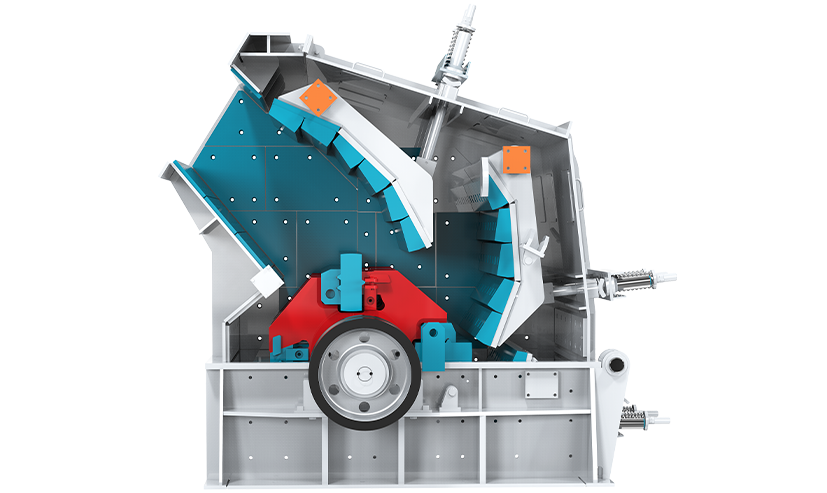
Definition – The feed opening, or inlet, is the size of material that can enter the crusher.
Significance – Proper feed size ensures smooth operation, prevents blockages, and protects the crusher from excessive wear.
Material hardness: Harder materials may require smaller feed sizes for efficient crushing.
Shape and density: irregular or dense materials may affect feeding efficiency.
Moisture content: Wet materials can stick and block the crusher if the feed size is too large.
Definition – The discharge opening is the gap at the bottom of the crusher through which processed material exits.
Adjustability – Most jaw crushers allow operators to adjust the discharge gap to control the final particle size.
1. Smaller discharge settings produce finer aggregates suitable for concrete and asphalt.
2. Larger settings yield coarser material suitable for road bases or landscaping.
3. Proper adjustment ensures uniform particle size and reduces recirculation of oversized materials.
Manufacturer Specifications – A reliable Jaw Crusher Factory lists feed size and adjustable discharge range in technical sheets.
Matching Material to Crusher Capacity – Feed size should not exceed the rate; otherwise, machine blockage or premature wear can occur.
Aligning Discharge with Production Goals – Adjust discharge according to the required aggregate size to ensure consistent quality.
Monitor Feed Material – Inspect incoming material to prevent oversize pieces from entering and causing damage.
Adjust Gradually – Make incremental changes to the discharge gap and observe output to achieve uniform particle size.
Regular Maintenance – Worn jaw plates or bearings can alter effective feed and discharge dimensions; timely replacement is essential.
Optimized Feed – Correctly sized feed allows smooth material flow, reduces energy consumption, and increases throughput.
Adjusted Discharge – Properly set discharge reduces recirculation of oversized particles and ensures uniform production.
Overall Efficiency – Balancing feed and discharge improves machine life, lowers maintenance costs, and stabilizes production rates.
Larger Feed Is Always Better – Oversized feed can block the crusher, increase wear, and compromise safety.
Discharge Settings Are Static – Regular adjustment is necessary to adapt to changing material properties and production targets.
Ignoring Manufacturer Guidelines – The Jaw Crusher Factory’s recommendations are based on extensive testing and provide reliable operational guidance.
Hydraulic Adjustment Systems – Some modern jaw crushers feature hydraulic discharge adjustment for faster, more precise control.
Smart Monitoring – Sensors and automation track feed and discharge performance in real time, reducing downtime.
Customizable Feed Openings – Factories offer machines with varied feed openings tailored to specific project requirements, enhancing versatility.
Mining and Quarrying – Crushing rocks and ores into manageable sizes for further processing.
Construction Projects – Converting demolished concrete and bricks into reusable aggregates.
Road and Infrastructure Work – Producing uniform stone sizes for paving, roadbeds, and foundations.
1. Understanding feed opening and discharge adjustment is vital for efficient jaw crusher operation.
2. The Jaw Crusher Factory provides detailed specifications and adjustable designs to accommodate a wide range of materials and production goals.
3. Proper management of feed and discharge not only improves crushing efficiency but also extends machine lifespan and ensures consistent output quality.
4. As technology evolves, operators can rely on advanced features such as hydraulic adjustment and smart monitoring to optimize performance further.
Machinery Weight 53-62t
Max Feeding size(mm) ≤600mm
Hopper Volume(m³) 80-360t/h
Machinery Weight 55-57t
Max Feeding size(mm) ≤215mm
Hopper Volume(m³) /
Machinery Weight 33-35t
Max Feeding size(mm) 150-400t/h
Hopper Volume(m³) 2.5
Machinery Weight 33t
Max Feeding size(mm) 150-400t/h
Hopper Volume(m³) 7m³
Machinery Weight 54-63t
Max Feeding size(mm) ≤600mm
Hopper Volume(m³) /
Machinery Weight 9.5-75t
Max Feeding size(mm) ≤1000mm
Hopper Volume(m³) 61-1204t/h
Just let we know what you want, and we will get in touch with you as soon as possible!

A high-tech enterprise integrating R&D, production, sales and service of crawler and stationary crushing and screening.
Scan the Mobile QR code
 Tel: +86 21-6891 1957
 Fax: +86 21-3756 6069
 E-mail: sales@dmcrushers.com
 Add: No. 1188,Fengliang Road, Fengcheng Town, Fengxian District, Shanghai, China