
 EN
 简体中文
 English
 Français
 Español
 عربي
 Русский

Machinery Weight 55-72t
Max Feeding size(mm) ≤700mm
Hopper Volume(m³) /



 REQUEST A QUOTE
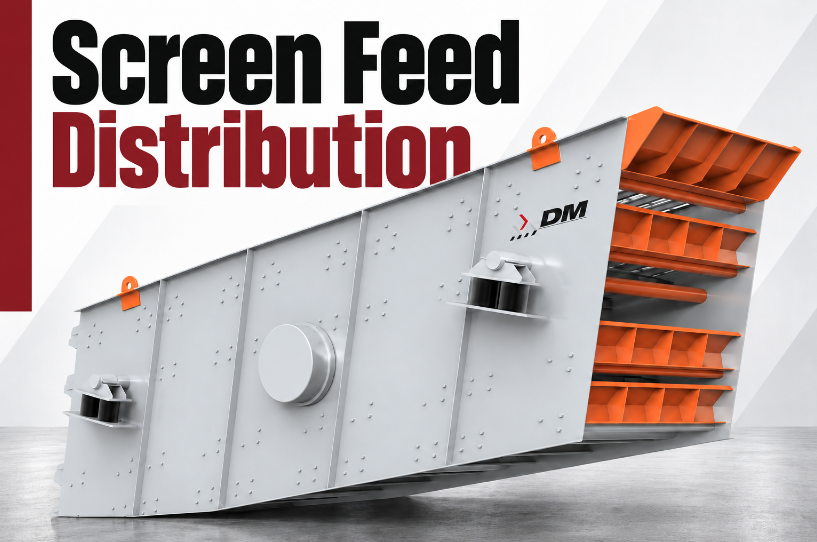
A screening plant can have the right nominal machine size and still present an uneven stream to the screen inlet. Material arriving mainly on one side does not use the deck in the same way as a stream distributed across the intended working area. The inlet arrangement deserves attention while the plant layout is still being coordinated.
For equipment buyers, the useful task is to bring the upstream discharge, inlet geometry and material description into the same discussion. Feed distribution should be reviewed by the responsible equipment and plant designers for the actual application. It cannot be inferred from a general capacity range alone.
| Interface | Information to coordinate | Question for review |
|---|---|---|
| Upstream discharge | Location, direction and operating conditions | Where does the stream originate? |
| Transfer arrangement | Layout and relevant geometry | How does material reach the inlet? |
| Material description | Size distribution and handling characteristics | What conditions is the design based on? |
| Screen inlet | Machine-specific requirements | Where should the stream be presented? |
| Maintenance access | Access and isolation provisions | Can the arrangement be inspected safely? |
When discussing a YK vibrating screen, show where the incoming material comes from and how it reaches the machine. Include the upstream belt or chute arrangement, the proposed transfer point and relevant elevations. An isolated screen drawing leaves the supplier to guess how the feed will arrive.
Describe the material using the information available for the project. Particle-size distribution, moisture and handling characteristics can affect the design discussion. Identify uncertain values openly and ask what additional information the supplier needs rather than presenting a preliminary estimate as measured plant data.
The inlet review is connected to the flowsheet but has a different focus from total circuit capacity. It asks how the material stream reaches the deck and whether the mechanical layout supports the intended distribution. Keep those interface questions visible even when the overall tonnage calculation has already been accepted.
A chute opening can be wider than the stream passing through it. Show the expected material trajectory and ask the responsible designer how the arrangement will spread material onto the intended inlet area. Do not assume that a wide rectangular opening automatically produces even loading.
Changes in direction, drop and upstream discharge conditions need consideration in the complete transfer design. The right solution depends on the material and plant geometry. Avoid prescribing a universal chute angle, drop height or internal fitting from a generic article.
A plant does not always operate at one perfectly steady condition. Ask the design team to identify the relevant operating range and expected changes in the feed. A review based only on one nominal condition may overlook how the stream shifts when the upstream process changes.
Separate known variation from uncertain assumptions. If the material information comes from a proposed source rather than an established operation, document that limitation. The supplier can then explain what needs confirmation before a final performance commitment or detailed transfer design is agreed.
Do not interpret uneven feed as proof of a machine defect before the complete system is reviewed. The inlet, upstream discharge and operating condition can all contribute. An investigation needs observations from the actual plant arrangement, made through an approved safe method.
The project should allow authorized personnel to inspect the relevant area using appropriate guarding, access and isolation arrangements. A transfer point hidden behind permanent structures can make a future investigation more difficult. Resolve access with the responsible plant designer before layout release.
Inspection access does not mean observing or reaching into operating machinery from an improvised position. The design and operating team must establish the appropriate method. Purchasing can help by ensuring that access needs are included in the interface discussion instead of being left to site improvisation.
After commissioning, a pattern of wear or material accumulation can prompt a distribution review. Record the operating conditions and relevant changes before drawing conclusions. A photograph of one worn area is useful context but does not establish the cause on its own.
Give the supplier the machine identification, transfer layout and history of modifications. If a chute liner or upstream discharge point has changed, include that information. A comparison is difficult when the current plant no longer matches the arrangement used for the original review.
Avoid making unapproved adjustments to machine speed, inclination or other operating settings to compensate for an uncertain inlet problem. Those settings belong within the manufacturer's guidance and the responsible engineering assessment. The first step is to understand the complete arrangement.
The purchase and layout record should identify the screen model, inlet requirements, upstream interface and material basis. State which party is responsible for each element of the transfer design. This prevents a gap where the machine supplier assumes a suitable inlet will be provided and the plant contractor assumes it is included with the machine.
A coordinated package does not promise a universal improvement percentage. It gives the project team a defined arrangement to build, inspect and discuss if conditions change. That practical clarity is the main reason to review feed distribution before civil and structural work makes the transfer point difficult to alter.
Machinery Weight 53-62t
Max Feeding size(mm) ≤600mm
Hopper Volume(m³) 80-360t/h
Machinery Weight 55-57t
Max Feeding size(mm) ≤215mm
Hopper Volume(m³) /
Machinery Weight 33-35t
Max Feeding size(mm) 150-400t/h
Hopper Volume(m³) 2.5
Machinery Weight 33t
Max Feeding size(mm) 150-400t/h
Hopper Volume(m³) 7m³
Machinery Weight 54-63t
Max Feeding size(mm) ≤600mm
Hopper Volume(m³) /
Machinery Weight 9.5-75t
Max Feeding size(mm) ≤1000mm
Hopper Volume(m³) 61-1204t/h
Just let we know what you want, and we will get in touch with you as soon as possible!

A high-tech enterprise integrating R&D, production, sales and service of crawler and stationary crushing and screening.
Scan the Mobile QR code
 Tel: +86 21-6891 1957
 Fax: +86 21-3756 6069
 E-mail: sales@dmcrushers.com
 Add: No. 1188,Fengliang Road, Fengcheng Town, Fengxian District, Shanghai, China