
 EN
EN  简体中文
简体中文 English
 Français
 Español
 عربي
عربي Русский
Machinery Weight 55-72t
Max Feeding size(mm) ≤700mm
Hopper Volume(m³) /



 REQUEST A QUOTE
On many construction sites, movement shapes the rhythm of the day. Materials arrive, are processed, and then moved again. In this flow, equipment that can travel with the work often becomes part of the routine. Among such machines, the mobile impact crusher has drawn steady attention. It combines mobility with the ability to break down materials on site, reducing the need for repeated transport.
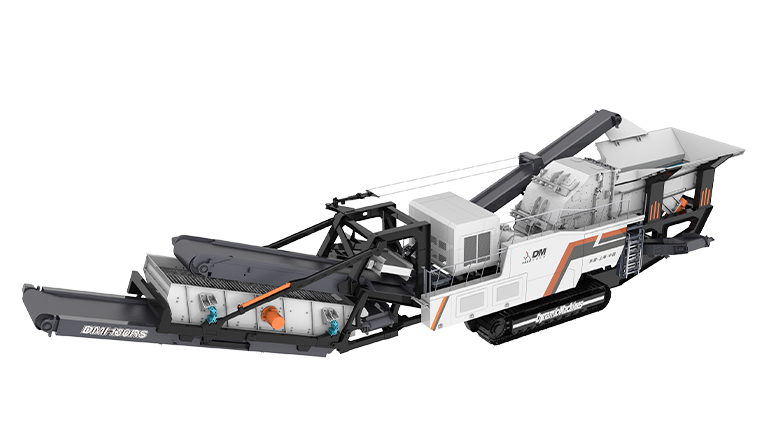
The concept is easy to grasp. A machine that crushes materials while being able to move from place to place. Yet behind this simple idea lies a working process that fits into different environments. Roads, demolition areas, and temporary projects all present shifting demands. A fixed system may not always match these changes. A mobile unit offers a different approach, one that adapts to location rather than requiring the location to adapt to it.
A mobile impact crusher is a machine designed to break down materials while being mounted on a movable platform. Instead of staying in one place, it can be transported to different sites and set up where needed.
Its structure combines a crushing unit with a mobile base. The base may move on tracks or wheels, allowing it to travel across uneven ground or along prepared paths. This mobility makes it suitable for projects that do not stay in one location for long.
The crushing part works by using impact force. Materials enter the machine and are struck by moving components inside. The force breaks them into smaller pieces. The result can then be used for further processing or applied directly in certain tasks.
Unlike stationary systems, this type of machine does not rely on permanent installation. It can be brought in, used, and then moved again. This flexibility shapes how it is used in real-world situations.
Work sites rarely remain unchanged. A project may begin in one area and gradually expand or shift. Materials may need to be processed closer to where they are found. Moving heavy materials across long distances can add time and effort.
A mobile system responds to this challenge by moving the processing step closer to the source. Instead of transporting raw material to a fixed machine, the machine goes to the material. This change in approach can alter the flow of work.
In temporary projects, mobility becomes even more relevant. Once a task is complete, the equipment can be relocated. There is no need to dismantle a fixed setup or leave it unused.
Space also plays a role. Some sites do not have room for large, permanent installations. A mobile unit can fit into tighter areas and adjust its position as needed.
These factors explain why mobility has become a defining feature rather than a simple addition.
At the center of the machine is the impact process. Materials are fed into the crushing chamber. Inside, moving parts strike the material with force. This impact causes the material to break apart.
The process follows a general flow:
1.Feeding
Materials are loaded into the machine through an opening. This can be done using other equipment or by direct input.
2.Impact crushing
Once inside, the material encounters fast-moving components. These parts hit the material, causing it to fracture. The force spreads through the material, breaking it into smaller pieces.
3.Separation
After being crushed, the material moves through the system. Pieces that meet the desired size continue forward, while larger fragments may be returned for further crushing.
4.Output
The final material exits the machine and can be collected or transferred to another process.
The sequence is continuous. As long as material is fed into the machine, the process repeats. This steady flow supports ongoing work without frequent interruption.
Mobile impact crushers are used with a range of materials found in construction and demolition environments. These include natural and man-made substances.
Common examples include:
Each type of material behaves differently when subjected to impact. Some break easily into smaller pieces. Others require repeated contact before reaching the desired size.
The machine is designed to handle this variation. Its working principle allows it to process materials with different levels of hardness and structure.
This flexibility makes it useful in projects where the material source may change over time. A single site may produce different types of material as work progresses.
The presence of this machine can be observed in several types of work environments. Each setting highlights a different aspect of its use.
Construction sites often use it to process raw materials on location. Instead of bringing in prepared material, the site can produce what it needs from available sources.
Demolition projects rely on it to break down structures after they are taken apart. Concrete and other materials can be reduced and reused, limiting the need to remove large volumes of debris.
Road work is another area where it appears. Old surfaces can be broken down and prepared for reuse. This approach keeps materials within the project rather than moving them elsewhere.
Temporary operations, such as short-term projects or remote locations, also benefit from its mobility. The machine can be transported in, used for the duration of the work, and then moved again.
The main difference lies in movement. A stationary system remains in one place. It often requires a prepared foundation and a stable environment. Materials must be transported to it.
A mobile system changes this arrangement. It travels to the site and processes materials there. This reduces the distance materials need to move.
The comparison can be seen in the following table:
| Feature | Mobile Impact Crusher | Stationary System |
|---|---|---|
| Location | Moves between sites | Fixed in one place |
| Setup | Temporary and flexible | Permanent or long-term |
| Material Handling | On-site processing | Requires transport to site |
| Space Requirements | Adapts to available space | Needs dedicated area |
| Project Suitability | Changing or short-term work | Stable, long-term projects |
Each system has its place. The choice depends on how the work is organized and how often the location changes.
Workflow on a site depends on timing and movement. Delays in one part of the process can affect the entire operation. A mobile impact crusher can influence this flow in several ways.
By processing materials on site, it reduces the need for repeated transport. This shortens the path between raw material and usable output.
It also allows work to continue in areas where setting up a fixed system would not be practical. This keeps the project moving without waiting for additional infrastructure.
The machine can be repositioned as the project evolves. If work shifts to a different area, the equipment follows. This reduces downtime and supports continuous operation.
In some cases, it also supports material reuse. Instead of removing debris and bringing in new material, the existing material can be processed and used again. This creates a more contained cycle within the site.
Using this type of machine involves more than simply placing it on site. Several factors shape how it performs in real conditions.
Site layout is one of them. The machine needs space to move and operate. Access paths and ground conditions influence how easily it can be positioned.
Material type also matters. Different materials respond differently to impact. Understanding what is being processed helps in planning how the machine will be used.
Coordination with other equipment is another aspect. Feeding and output often depend on additional machines. These need to work together to maintain a steady flow.
Safety remains part of the daily routine. Operators and nearby workers must be aware of the machine's movement and operation. Clear communication helps reduce risk.
Maintenance is part of ongoing use. Regular checks keep the machine functioning as expected. This supports consistent performance over time.
The design of a mobile impact crusher reflects a shift in how work is approached. Projects have become more dynamic. Locations change, timelines shift, and materials vary.
A machine that can move and adapt fits into this environment. It supports a style of work that values flexibility and responsiveness.
Rather than building everything around fixed systems, the focus shifts to tools that can adjust to different situations. This approach allows projects to respond to real conditions rather than relying on a single setup.
The mobile impact crusher is one example of this shift. Its design is shaped by the need to move, to adapt, and to continue working as conditions change.
Machinery Weight 53-62t
Max Feeding size(mm) ≤600mm
Hopper Volume(m³) 80-360t/h
Machinery Weight 55-57t
Max Feeding size(mm) ≤215mm
Hopper Volume(m³) /
Machinery Weight 33-35t
Max Feeding size(mm) 150-400t/h
Hopper Volume(m³) 2.5
Machinery Weight 33t
Max Feeding size(mm) 150-400t/h
Hopper Volume(m³) 7m³
Machinery Weight 54-63t
Max Feeding size(mm) ≤600mm
Hopper Volume(m³) /
Machinery Weight 9.5-75t
Max Feeding size(mm) ≤1000mm
Hopper Volume(m³) 61-1204t/h
Just let we know what you want, and we will get in touch with you as soon as possible!

A high-tech enterprise integrating R&D, production, sales and service of crawler and stationary crushing and screening.
Scan the Mobile QR code
 Tel: +86 21-6891 1957
 Fax: +86 21-3756 6069
 E-mail: sales@dmcrushers.com
 Add: No. 1188,Fengliang Road, Fengcheng Town, Fengxian District, Shanghai, China