
 EN
EN  简体中文
简体中文 English
 Français
 Español
 عربي
عربي Русский
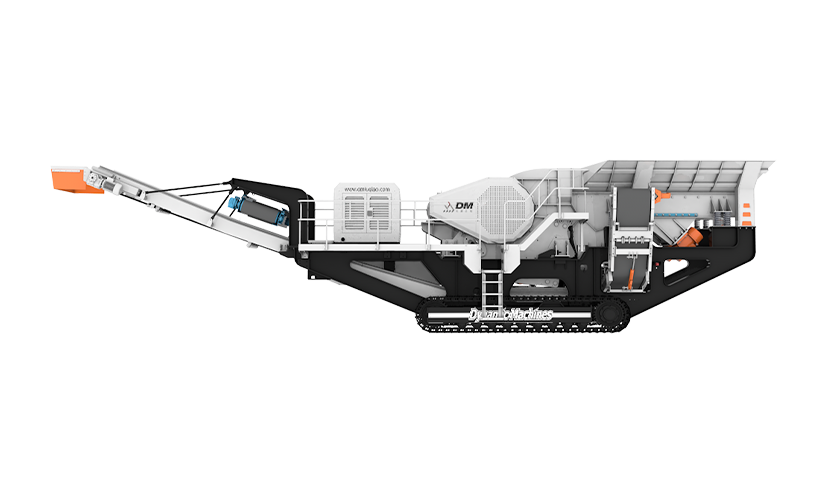
Machinery Weight 55-72t
Max Feeding size(mm) ≤700mm
Hopper Volume(m³) /



 REQUEST A QUOTE
Impact crushers are widely used in construction and demolition projects for material reduction. When considering whether an Impact Crusher is suitable for processing concrete and asphalt, it is essential to evaluate its operational capabilities, material characteristics, and design features. Reputable Impact Crusher Factory designs are optimized for handling such demolition materials efficiently.
Material Compatibility: Impact crushers are effective with brittle and medium-hard materials, making them suitable for concrete and asphalt.
High Reduction Ratio: They can reduce large chunks of material into smaller, uniform pieces.
Versatility: Suitable for both primary and secondary crushing in recycling projects.
Concrete is a dense and sometimes reinforced material, which poses challenges for crushing.
Reinforcement Consideration: Impact crushers can handle some reinforced concrete, but large steel rebars may require pre-processing or magnetic separation.
Crushing Efficiency: The rotor and blow bar design allow the concrete to be broken down efficiently into aggregate sizes suitable for reuse.
Particle Shape: Properly configured impact crushers produce cubical aggregates that are ideal for road base or new concrete production.
Asphalt is softer than concrete but can stick to machinery if not managed correctly.
Soft Material Handling: Impact crushers handle asphalt without generating excessive fines.
Reducing Contamination: Clean feed prevents rubber or debris contamination, preserving the quality of recycled asphalt.
Adjustable Rotor Speed: Controlling rotor speed reduces the risk of material smearing and ensures uniform crushed output.
The rotor and blow bars are critical for determining the crusher’s ability to process concrete and asphalt.
High-Impact Blow Bars: Ensure effective fragmentation of tough concrete.
Replaceable and Wear-Resistant Materials: Extend operational life when processing abrasive materials.
Customizable Rotor Configuration: Enables adjustment for different material hardness and recycling requirements.
Proper operation ensures safety, reduces wear, and improves productivity.
Controlled Feeding: Prevents overloading the crusher and ensures consistent crushing efficiency.
Screening and Separation: Pre-screening removes oversized or undesirable materials.
Regular Maintenance: Checking blow bars, rotors, and bearings helps maintain consistent performance.
6. Advantages of Using Impact Crushers for Demolition Materials
Impact crushers offer several benefits when applied to concrete and asphalt recycling.
High Reduction Ratio: Reduces large debris into usable aggregate quickly.
Flexibility: Can be adjusted to produce different aggregate sizes for various construction needs.
Recyclable Material Output: Provides aggregates suitable for reuse in roads, pavements, and concrete production.
While impact crushers are versatile, certain factors must be considered to avoid operational issues.
Reinforced Concrete Challenges: Large steel reinforcements can damage blow bars if not removed.
Material Moisture Content: Wet asphalt may stick to the rotor, reducing efficiency.
Wear Costs: Abrasive concrete can cause higher replacement rates for wear parts.
Impact crushers are highly suitable for processing concrete and asphalt when configured correctly. Their ability to handle brittle and medium-hard materials, combined with adjustable rotor and blow bar designs, allows them to produce high-quality recycled aggregates. By following operational practices, including controlled feeding, regular maintenance, and proper material preparation, contractors can improve efficiency and extend equipment life. Partnering with a reliable Impact Crusher Factory ensures access to well-engineered machines capable of meeting the demanding needs of construction and demolition recycling projects.
Machinery Weight 53-62t
Max Feeding size(mm) ≤600mm
Hopper Volume(m³) 80-360t/h
Machinery Weight 55-57t
Max Feeding size(mm) ≤215mm
Hopper Volume(m³) /
Machinery Weight 33-35t
Max Feeding size(mm) 150-400t/h
Hopper Volume(m³) 2.5
Machinery Weight 33t
Max Feeding size(mm) 150-400t/h
Hopper Volume(m³) 7m³
Machinery Weight 54-63t
Max Feeding size(mm) ≤600mm
Hopper Volume(m³) /
Machinery Weight 9.5-75t
Max Feeding size(mm) ≤1000mm
Hopper Volume(m³) 61-1204t/h
Just let we know what you want, and we will get in touch with you as soon as possible!

A high-tech enterprise integrating R&D, production, sales and service of crawler and stationary crushing and screening.
Scan the Mobile QR code
 Tel: +86 21-6891 1957
 Fax: +86 21-3756 6069
 E-mail: sales@dmcrushers.com
 Add: No. 1188,Fengliang Road, Fengcheng Town, Fengxian District, Shanghai, China