
 EN
EN  简体中文
简体中文 English
 Français
 Español
 عربي
عربي Русский
Machinery Weight 55-72t
Max Feeding size(mm) ≤700mm
Hopper Volume(m³) /



 REQUEST A QUOTE
An industrial jaw crusher runs under constant pressure. Large material enters, gets compressed, and exits in a reduced size. The process looks simple from the outside. Inside, it is a continuous cycle of force, vibration, friction, and motion.
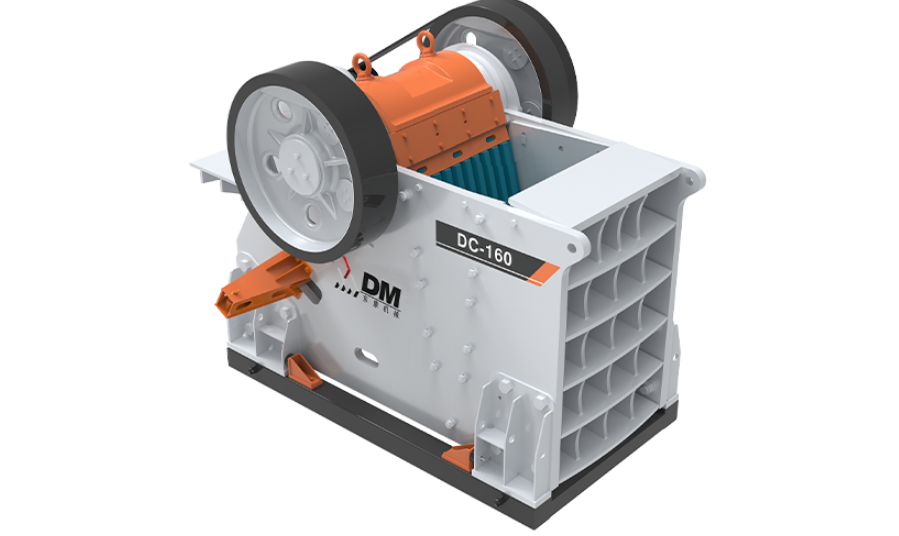
Long-term operation depends less on one single action and more on steady attention. Maintenance is not a fixed event. It becomes part of daily rhythm around the machine.
A jaw crusher does not fail suddenly in most cases. Small changes appear first. Slight vibration shifts. Noise patterns feel different. Material flow becomes uneven.
These changes often come from gradual wear. Not one major breakdown point.
The machine works in cycles. Each cycle adds small stress to moving parts. Over time, that stress builds up. If it is ignored, performance becomes unstable.
Regular attention helps keep the system predictable. It also makes it easier to spot early changes before they turn into larger issues.
The frame is often treated as something that does not need attention. In reality, it carries constant load.
When material is crushed, vibration travels through the entire structure. Even if movement is not visible, stress is still present.
A simple way to observe the frame condition is through behavior rather than appearance.
These signs do not always mean damage, but they indicate that alignment should be reviewed.
The frame acts like the reference line of the whole machine. If it changes, everything connected to it responds.
Jaw plates are the main contact surface. Every piece of material passes through them. This makes them one of the most active wear zones.
Their surface slowly changes over time. It does not happen in a clear step. It happens layer by layer.
As wear increases, the crushing pattern also shifts. Material may become less uniform in size. More force may be needed for the same output.
Instead of waiting for performance drop, many operators observe the surface condition regularly.
A simple observation routine often includes:
Jaw plates do not just break material. They also shape the final output pattern. That is why their condition affects the entire system.
Lubrication is often overlooked because it is not visible during operation. It works quietly inside bearings and moving joints.
Inside a jaw crusher, movement is constant. Rotation, compression, and sliding motion all happen at the same time. Without lubrication, friction increases quickly.
When lubrication is stable, movement feels smoother. When it weakens, resistance increases.
A simple comparison helps explain it:
Lubrication is not only about reducing friction. It also helps stabilize motion behavior over time.
Bearings support rotating and moving parts. They carry load while allowing motion at the same time.
Inside a working crusher, bearings never stay idle. They rotate continuously under pressure.
Over time, their condition reflects the internal state of the machine.
Early signs of bearing stress often include:
These signals usually appear gradually. They are easy to ignore at first.
Bearings depend heavily on both alignment and lubrication. If either condition shifts, performance changes slowly but steadily.
The pitman connects motion from the drive system to the crushing action. It does not just move. It transfers force.
Because of this role, it is exposed to both direction change and pressure change.
The motion system is built for repetition. But repetition still creates wear over time.
Instead of sudden failure, changes often appear in movement rhythm.
These signs suggest that internal alignment or load distribution may need attention.
The pitman system works like a translator of motion. If translation becomes uneven, the crushing process also becomes uneven.
Maintenance in this system is not a single task. It is a set of repeated habits that keep conditions stable.
Below is a simple overview of practical focus areas:
| Area | What to observe | Why it matters |
|---|---|---|
| Structure | vibration and alignment | keeps system stable |
| Crushing chamber | wear pattern | controls output size |
| Moving parts | smooth motion | ensures consistent force transfer |
| Lubrication points | flow condition | reduces friction and heat |
| Output area | material flow | prevents blockage |
Each area connects to another. A change in one often influences the rest.
Maintenance is not about fixing problems after they appear. It is about noticing changes while they are still small.
Material flow inside the chamber is not always uniform. Different sizes, shapes, and hardness levels interact differently with the jaw plates.
When flow is smooth, pressure distribution stays balanced.
When flow becomes uneven, pressure concentrates in certain areas.
This imbalance can slowly affect wear patterns.
Signs of uneven flow include:
Flow is closely connected to chamber shape and discharge opening condition. Even small changes in these areas can affect movement inside the system.
Continuous operation creates a steady environment, but also hides gradual change.
Instead of looking for large problems, attention usually goes to small signals.
Some of the most common observation points include:
These signals do not act independently. They form a pattern when viewed together.
A machine in stable condition usually shows balanced behavior across all points. When imbalance appears, it often shows in more than one area.
A jaw crusher is not a collection of separate parts working independently. It is a connected system where motion, force, and resistance interact continuously.
When balance is maintained, energy flows through the system smoothly. When balance shifts, force concentrates in certain zones.
This imbalance does not always show immediately. It develops slowly through repeated cycles.
Over time, small differences in wear, alignment, or lubrication can change the overall behavior.
Long-term operation depends on keeping these small factors aligned with each other. Not perfectly, but consistently close enough to avoid instability.
The machine continues its cycle as long as balance stays within a stable range.
Machinery Weight 53-62t
Max Feeding size(mm) ≤600mm
Hopper Volume(m³) 80-360t/h
Machinery Weight 55-57t
Max Feeding size(mm) ≤215mm
Hopper Volume(m³) /
Machinery Weight 33-35t
Max Feeding size(mm) 150-400t/h
Hopper Volume(m³) 2.5
Machinery Weight 33t
Max Feeding size(mm) 150-400t/h
Hopper Volume(m³) 7m³
Machinery Weight 54-63t
Max Feeding size(mm) ≤600mm
Hopper Volume(m³) /
Machinery Weight 9.5-75t
Max Feeding size(mm) ≤1000mm
Hopper Volume(m³) 61-1204t/h
Just let we know what you want, and we will get in touch with you as soon as possible!

A high-tech enterprise integrating R&D, production, sales and service of crawler and stationary crushing and screening.
Scan the Mobile QR code
 Tel: +86 21-6891 1957
 Fax: +86 21-3756 6069
 E-mail: sales@dmcrushers.com
 Add: No. 1188,Fengliang Road, Fengcheng Town, Fengxian District, Shanghai, China