
 EN
EN  简体中文
简体中文 English
 Français
 Español
 عربي
عربي Русский
Machinery Weight 55-72t
Max Feeding size(mm) ≤700mm
Hopper Volume(m³) /



 REQUEST A QUOTE
In industrial equipment sourcing, relationships rarely stay at the level of a single deal. Cone crusher equipment is a long-use asset. It connects with production lines, material flow, and daily output. Once it is in operation, replacement or adjustment is not something done casually.
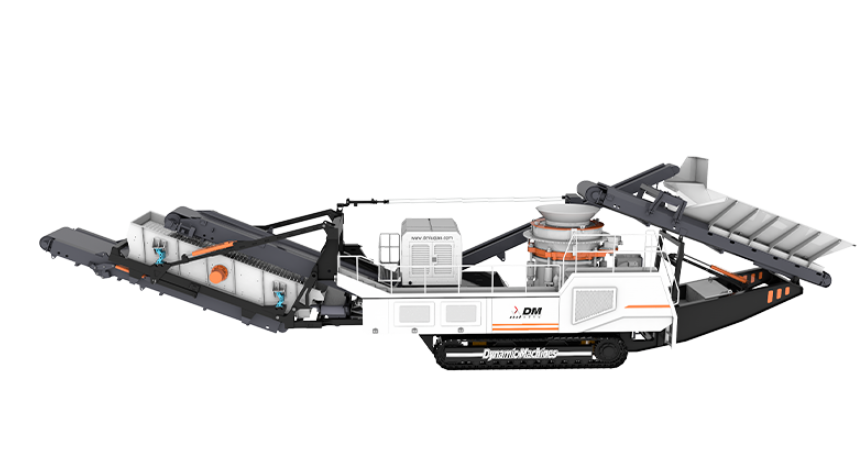
Because of this, long-term cooperation with cone crusher manufacturer becomes more than a business choice. It slowly turns into a working habit between two sides.
Some buyers notice this early. Others only realize it after several orders have passed.
In theory, any supplier can deliver equipment once. That part is not complicated. The harder part comes later, when real operation starts.
A cone crusher usually sits inside a continuous system. When something feels slightly off, it affects the whole line. That is where repeat cooperation begins to matter.
Most experienced buyers tend to prefer stability over change. Not because new suppliers are bad, but because predictability becomes more valuable over time.
What usually changes in long-term cooperation is not the machine itself, but the communication rhythm around it.
Trust is not something that appears after a contract. It grows slowly, often through small details that don't look important at first.
For example, how a manufacturer replies to simple questions. Or how they handle unclear requirements. These moments tend to leave stronger impressions than formal promises.
In many cases, trust builds like this:
It is not a sudden shift. It is more like repetition shaping comfort.
At the beginning, communication usually takes effort. Both sides try to explain everything clearly. That stage often feels slow.
Later, something interesting happens. Words become fewer, but understanding increases.
Buyers don't always need long explanations once cooperation becomes familiar. A short message can replace a long instruction.
Still, communication quality remains important. The difference is that it becomes more practical than descriptive.
In real projects, good communication often looks simple:
When communication reaches this level, cooperation feels lighter.
Consistency is something buyers watch closely, especially after the first order.
A China Cone Crusher is not judged only when it arrives. It is judged again when similar units are ordered later. That comparison matters more than initial appearance.
What buyers usually notice over time is subtle:
| Area of observation | What tends to stand out |
|---|---|
| Assembly behavior | Whether structure feels stable each time |
| Output condition | Whether performance feels familiar |
| Surface handling | Whether finishing looks steady |
| Repeated orders | Whether results stay close to earlier ones |
No one measures this with tools every time. It is more of a memory-based comparison.
After-service is often underestimated in early discussions. At the beginning, everyone focuses on delivery.
But once equipment is running, questions start to appear. Not always big problems. Sometimes small adjustments or operational doubts.
At that point, response behavior becomes important.
A manufacturer that stays reachable tends to build stronger cooperation. Not because issues happen often, but because support is available when needed.
In practice, buyers usually remember:
This part often decides whether cooperation continues or slowly fades.
Industrial demand rarely stays fixed. Even if the equipment is the same, usage conditions may shift.
Flexibility does not mean constant change. It means being able to adjust without breaking the workflow.
This might appear in small ways:
Some manufacturers are strict in structure. Others are more adaptive. Long-term cooperation usually prefers balance rather than extremes.
There are no perfect indicators, but some patterns repeat often in stable partnerships.
Buyers usually start noticing things like:
None of these appear suddenly. They develop after several rounds of cooperation.
Stability is not loud. It shows up in reduced effort.
Even stable partnerships face friction from time to time.
It is not always about equipment quality. More often, it comes from timing, expectations, or changes in project direction.
Some common situations include:
What matters is not avoiding these situations completely, but how both sides react.
A calm response usually prevents small issues from becoming larger ones.
Planning is often overlooked in early discussions. But over time, it becomes more important than expected.
When both sides understand order cycles and timing patterns, coordination becomes easier.
Good planning usually reduces unnecessary pressure. It helps both sides prepare instead of reacting.
In real cooperation, planning often includes:
Once this becomes familiar, communication becomes lighter.
Something changes after repeated cooperation. Not in the product, but in the interaction.
Both sides start to understand each other's working style. Less explanation is needed. Fewer misunderstandings appear.
Work that once required discussion becomes routine.
This is where long-term cooperation shows its real value. It is not about doing things differently, but doing them with less friction.
Most supplier relationships follow a gradual path.
At first, everything is evaluated carefully. Later, adjustments are made based on experience. Eventually, patterns form.
It does not feel like a planned process. It happens step by step through repeated orders.
Each interaction adds a small layer of understanding. Over time, that becomes the foundation of stable cooperation.
Long-term cooperation does not continue by itself. It continues because both sides still find it workable.
What usually keeps it going is not a single factor, but a combination:
When these remain balanced, cooperation tends to continue naturally without forcing it.
Machinery Weight 53-62t
Max Feeding size(mm) ≤600mm
Hopper Volume(m³) 80-360t/h
Machinery Weight 55-57t
Max Feeding size(mm) ≤215mm
Hopper Volume(m³) /
Machinery Weight 33-35t
Max Feeding size(mm) 150-400t/h
Hopper Volume(m³) 2.5
Machinery Weight 33t
Max Feeding size(mm) 150-400t/h
Hopper Volume(m³) 7m³
Machinery Weight 54-63t
Max Feeding size(mm) ≤600mm
Hopper Volume(m³) /
Machinery Weight 9.5-75t
Max Feeding size(mm) ≤1000mm
Hopper Volume(m³) 61-1204t/h
Just let we know what you want, and we will get in touch with you as soon as possible!

A high-tech enterprise integrating R&D, production, sales and service of crawler and stationary crushing and screening.
Scan the Mobile QR code
 Tel: +86 21-6891 1957
 Fax: +86 21-3756 6069
 E-mail: sales@dmcrushers.com
 Add: No. 1188,Fengliang Road, Fengcheng Town, Fengxian District, Shanghai, China